
Weed & Pest Control
Taking action on weed and pest control is in your interest, the interest of your property and of your community. In fact, it is mandatory that you act to control certain declared weeds. There is a wealth of information to help you, people to guide you, and if you don’t feel confident or have the time to act yourself there will be contractors with all the necessary equipment that you can
hire to do the control work for you.
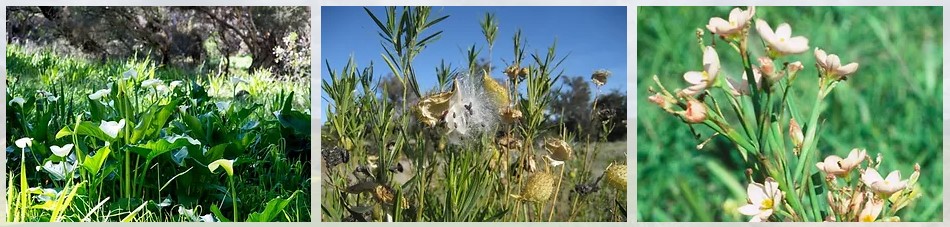
Three Bits of Information About Weeds
1. This may be for temperate conditions in Northern Hemisphere, but shows that weeds can be useful as indicators of soil conditions:
- Low pH – Plantain, Sorrel, Red clover, Bracken
- High pH – Wild pansy
- Just right – Chickweed
- High in nutrients – Chickweed, Sow thistle
- High in Nitrogen – Stinging nettle, Fat hen
- Declining fertility – Weeds that flower summer and autumn
- Low in Nitrogen – Clover, Vetch
- Dry soil – Pig weed
- Poor drainage – Buttercups, Dock
- Well aerated and moist – Chickweed
- High in Humus – Chickweed, Fat hen, Dandelion
2. The Other Side of Weeds – Nutrition Matters – Nutri-Tech Solutions
http://blog.nutri-tech.com.au/the-other-side-of-weeds/
3. Nicole Masters speaking at a Boyup Brook workshop in February 2017:
3.1 Weeds are bio accumulators. Use tissue sampling to see what they are accumulating. Apply to the soil the mineral that the weed(s) is/are accumulating most, and in time the weed will disappear.
3.2 Squeeze / crush the juice out of dying plants of a weed species. The juice will contain the specific microbes of decay for that species. Dilute this juice in water and spray on living weeds of the same species and you will have a species-specific biological herbicide. (The dilution may be a question of trial and error. Any findings would be gratefully received.)